The City of London has approved a 74-storey office tower at 1 Undershaft, which will rise to 309.6 metres, equal to The Shard and the maximum height permitted by aviation rules. The tower, designed by Eric Parry Architects, will deliver a large quantum of Grade A workspace, significant public space and a new vantage point for the capital, placing it at the centre of debates about density, heritage and post-pandemic office demand.
The scheme will stand within the Eastern City Cluster, replacing the existing St Helen’s building, and is set to become a focal point in the Square Mile’s skyline strategy. The decision, taken on 13 December 2024, underscores the City Corporation’s argument that high-quality, energy-efficient offices can support economic growth while also enhancing civic life with free public amenities.
The design at a glance
Eric Parry’s current design moves away from the earlier cross-braced “Trellis” concept toward a segmented form that increases usable floor area and improves the interface with the streets around St Helen’s Square. The tower’s massing is organised as four vertical blocks with refined detailing to break down scale, while the base opens up to create permeability and new sightlines. These adjustments respond to committee feedback in July 2024, which focused on how the lower levels meet public space.
A free-to-access public garden about 42 metres above ground is planned, alongside external terraces and winter gardens that bring nature into the working day. The project team highlights a biodiverse landscape and a long elevated perimeter walk as features intended to widen public use.
Height, aviation limits and the joint tallest claim
The building will reach 309.6 metres, the aviation ceiling that also governs The Shard. Matching rather than exceeding this height ensures air navigation safety while still achieving supertall status in European terms. The joint-tallest billing is therefore precise, not rhetorical, and sets a clear benchmark for any future proposals in London that seek to go higher.
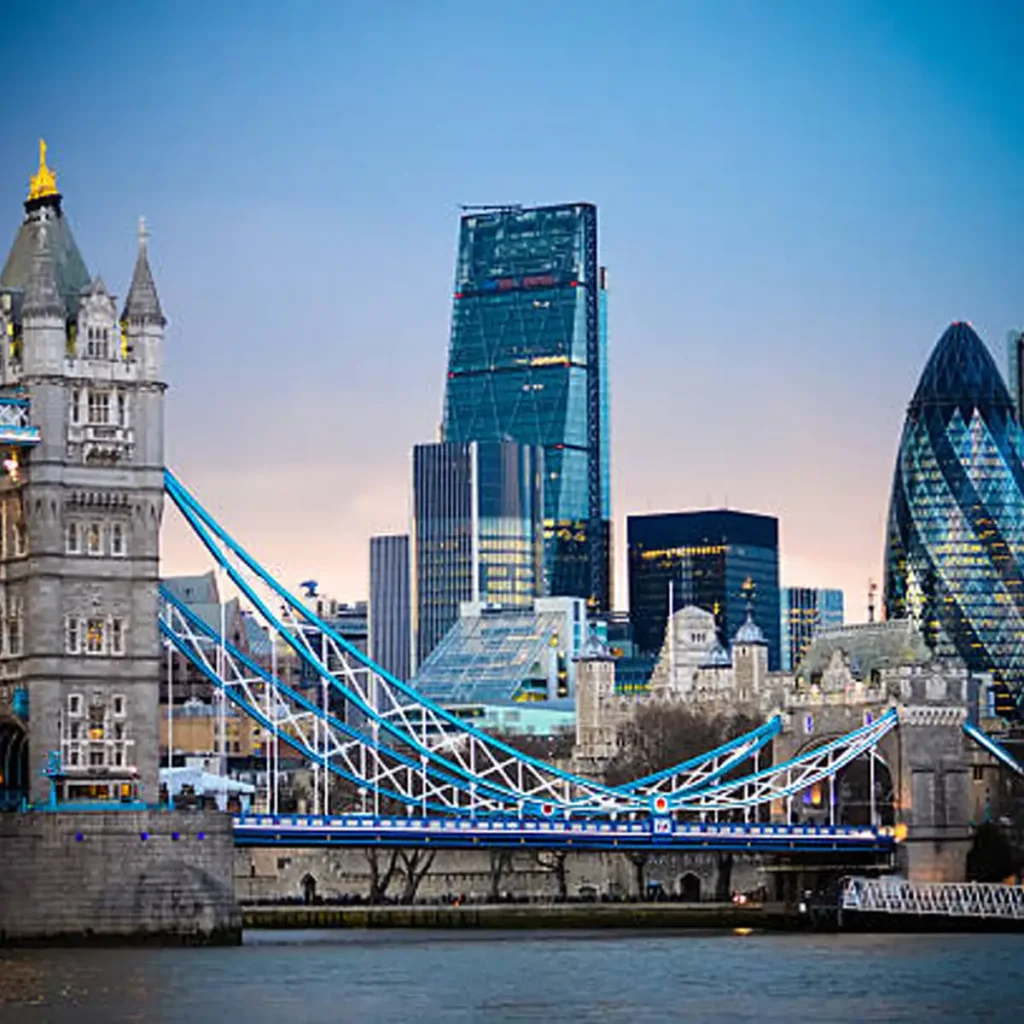
This choice has urban design implications. A level cap creates a family of peaks rather than a single dominant spire, shaping a skyline with several comparable summits, including 22 Bishopsgate and the Leadenhall Building, that read together rather than in isolation. For planners and heritage stakeholders, this reduces the risk of a single outlier overwhelming protected views.
What will be delivered to the public
Access is central to the pitch. The scheme includes a free public viewing gallery at the top, described as Europe’s highest publicly accessible gallery, plus educational space linked to the London Museum and a “classroom in the sky”. The base will reconfigure St Helen’s Square with a large screen and space for cultural events, integrating daily footfall with programmed activity. These elements are intended to make the tower a civic platform as well as a workplace.
At intermediate levels, terraces and winter gardens will provide outdoor space for workers, with planting and weather-protected edges. The combination of a high-level gallery and a mid-level public garden is unusual in the UK office market, and it reflects a trend in tall building design that trades height for public benefit.
Fun fact: The public garden sits roughly 42 metres above street level, close to the height of Nelson’s Column, giving visitors a new perspective on the insurance district and the Lloyd’s building without taking a lift to the very top.
Capacity, market context and the 2040 target
The City Corporation’s policy framework identifies the need for at least 1.2 million sq m of additional net office space by 2040. 1 Undershaft is forecast to deliver about 13% of that requirement in one project, a concentration of floorspace that would be difficult to find on multiple smaller sites. This explains why the proposal advanced even as the broader office market wrestled with higher borrowing costs and hybrid working. Premium, well-located, amenity-rich offices continue to outperform commodity stock, a pattern seen in leasing data across global financial centres.
The City’s approval committee cited economic contribution and cultural offer, balancing concerns from heritage and faith groups with the strategic need for space that meets modern standards. In the same meeting cycle, a separate tower was refused due to daylight and heritage impacts, illustrating how case-by-case judgments hinge on specific urban effects rather than a generic appetite for height.
Planning journey and design changes
The present scheme follows a complex planning path. A major redesign was submitted in early 2024, then refined again in October after a July committee deferral that sought improvements at ground level and in the relationship with the square. The December 2024 resolution to grant consent concluded this phase, with planning documents detailing view assessments, wind comfort, daylight and sunlight, security and servicing strategies.
Key updates include a slimmer ground plane, larger colonnades, more generous routes through to Bishopsgate and Leadenhall Street, and a clearer hierarchy of entrances. The aim is frictionless movement at peak times, with retail and active frontage to keep the square animated outside office hours.
Architecture and engineering specifics
The tower will provide approximately 154,000 sq m of commercial floorspace, placing it among the largest single office developments in the UK. Structural engineering is expected to address long span floors, occupant comfort under wind excitation and vibration control, alongside the typical supertall challenges of core stiffness and outrigger strategy. While final procurement details will emerge at a later stage, the published material confirms a clear brief for robust performance and flexible planning grids to suit large tenants, floorplate subdivisions and future fit-out cycles.
Given its height, the building will require sophisticated lift strategies, likely including double-deck or destination control systems to minimise waiting times and handle event peaks for the gallery. Back-of-house design integrates security screening for visitors and a split logistics plan to keep servicing away from public routes, maintaining safety and experience in the square.

Sustainability, reuse and operational performance
The scheme positions sustainability not as an afterthought but as a core performance driver. The design signals enhanced fabric efficiency, high-performance glazing, winter garden buffers and demand reduction measures. On-site planting in the garden and terraces supports urban biodiversity, while end-of-trip facilities and limited parking encourage walking and cycling. Lifecycle modelling and circular economy statements in the planning file point to reuse strategies at the component level and design for deconstruction, which are becoming standard in the City’s tall building pipeline.
Operational carbon will be the key metric once the building opens. Energy intensity, peak demand management and grid decarbonisation trajectories will determine whether promised reductions are delivered. For occupiers, lower energy bills and better thermal comfort are commercial as well as ethical outcomes, supporting staff retention and ESG reporting.
Heritage, views and the skyline test
Tall buildings in the City must pass a series of view protections and setting assessments, notably those related to St Paul’s Cathedral and the Tower of London. The planning documentation includes verified views and visual impact analysis demonstrating compliance with protected corridors and assessing cumulative effects with the existing cluster. Objections from conservation bodies emphasised concerns about the Tower’s setting, yet the committee concluded that the public benefits and design mitigations outweighed identified harms.
At street level, the scheme addresses microclimate through wind engineering and façade optimisation. Canopies, screens and planting reduce downwash and accelerations that can make public space uncomfortable near tall buildings. The commitment to active uses and cultural programming is designed to prevent a windswept forecourt and to keep eyes on the space after dark.
Governance, development team and delivery
The developer is Aroland Holdings with Stanhope as development manager, reflecting a partnership between international capital and a UK firm with deep experience in complex urban projects. The architect is Eric Parry Architects, with engineering and specialist consultants captured in the submitted materials. The December 2024 vote to grant consent was recorded by the City of London Corporation, with subsequent communications from both the authority and the development team setting out next steps toward procurement and construction.
The approval does not automatically translate to an immediate start on-site at full pace. Market timing, tenant pre-commitments, and financing conditions will shape build sequencing. Early demolition and enabling works are likely to align with contractor mobilisation and off-site fabrication lead times for the superstructure.
What this means for the City’s office market
The decision illustrates a dual-track market. Older, energy-intensive stock faces obsolescence risk, while best-in-class buildings with rich amenities, public viewing galleries and health-focused design continue to attract demand. London’s status as a global financial centre relies on this pipeline of top-tier space, and the City’s strategy is explicit about concentrating bulk where transport capacity and urban design frameworks can absorb it. 1 Undershaft is a textbook example of that approach.
For policymakers, the project raises questions about how public benefit is measured. Free access to views and gardens is valuable, but so is the less visible benefit of consolidating employment around existing transport nodes instead of pushing sprawl. The committee’s stance suggests a holistic accounting that weighs both.
Comparison with peers in the Eastern Cluster
Neighbouring towers such as 22 Bishopsgate and the Leadenhall Building set benchmarks for floorplate size, retail activation and public access. 1 Undershaft goes further on the public programme by combining a high-level gallery with a mid-level garden and street-level cultural infrastructure. If delivered as set out, the scheme could shift expectations for what Londoners receive in exchange for height.
From a skyline perspective, the joint tallest status, tied to aviation controls, makes the building a capstone rather than an outlier. The composition of peaks in the cluster remains legible from key viewpoints, while the ground level changes have been engineered to improve pedestrian comfort and legibility through complex streets.
Risks, scrutiny and what to watch next
Delivery risk is non-trivial. Macroeconomic volatility, construction inflation and shifting workplace practices can affect leasing velocity and financing. The City’s own forecasts depend on premium office demand holding up as older stock falls away. On the planning side, judicial review remains a theoretical possibility for contentious tall buildings, though the December decision followed an established process with extensive documentation and public reporting.
On site, the test will be whether the promised quality at the base and in the public spaces materialises as designed. Tall buildings succeed or fail where people touch them, not at the tip. The updated plans indicate the design team understands that point, with more openness, clearer routes and an events strategy for St Helen’s Square.
Conclusion
One Undershaft is a strategic statement about London’s future. Matching The Shard in height, it commits to free views, a garden in the sky and a reshaped square, aligning commercial ambition with public value. The decision reflects a planning culture that rewards quality, not just quantity, and a market that still prizes well-designed, well-located offices. The tower’s success will be judged on delivery, not drawings, but the direction is clear. In a city that grows by refining its fabric, not scrapping it, One Undershaft reads as a precise stitch, small at the point of contact and visible across the whole pattern.