Jump to section
Buying second-hand is one of the easiest ways to save money, and most private sales go smoothly. The few that do not tend to follow the same handful of patterns. Once you know them, a scam is usually easy to spot before any money changes hands.
This guide covers the warning signs, the safest ways to pay, what to check before you buy, and what to do if something goes wrong.
The warning signs worth knowing
Scammers rely on a short list of tricks. Treat any of these as a reason to slow down:
A price that is far too low. A nearly new phone or car at half its usual price is the oldest bait there is. If it looks like a bargain nobody else has noticed, ask why.
The seller cannot meet you. Stories about working abroad, being on a ship or an oil rig, or having the item "with a courier" are classic. A genuine seller is usually happy for you to see the item.
A deposit before you have seen anything. Asking you to "hold" an item, a car or a flat with a bank transfer is one of the most common frauds, especially with rentals.
Pressure to decide now. "Three other people are interested" is designed to stop you thinking. A real seller can wait an hour while you check things.
Moving the conversation elsewhere. Being pushed to continue on WhatsApp, Telegram or by text takes you away from the platform, where messages and reports can be checked.
Links and payment "confirmations". Fake delivery pages and emails that look like a payment service saying "the money is on hold" are made to collect your card details or to convince you that you have been paid when you have not.
Overpayment. A buyer who sends more than the asking price and asks you to refund the difference is almost always paying with money that will later disappear.
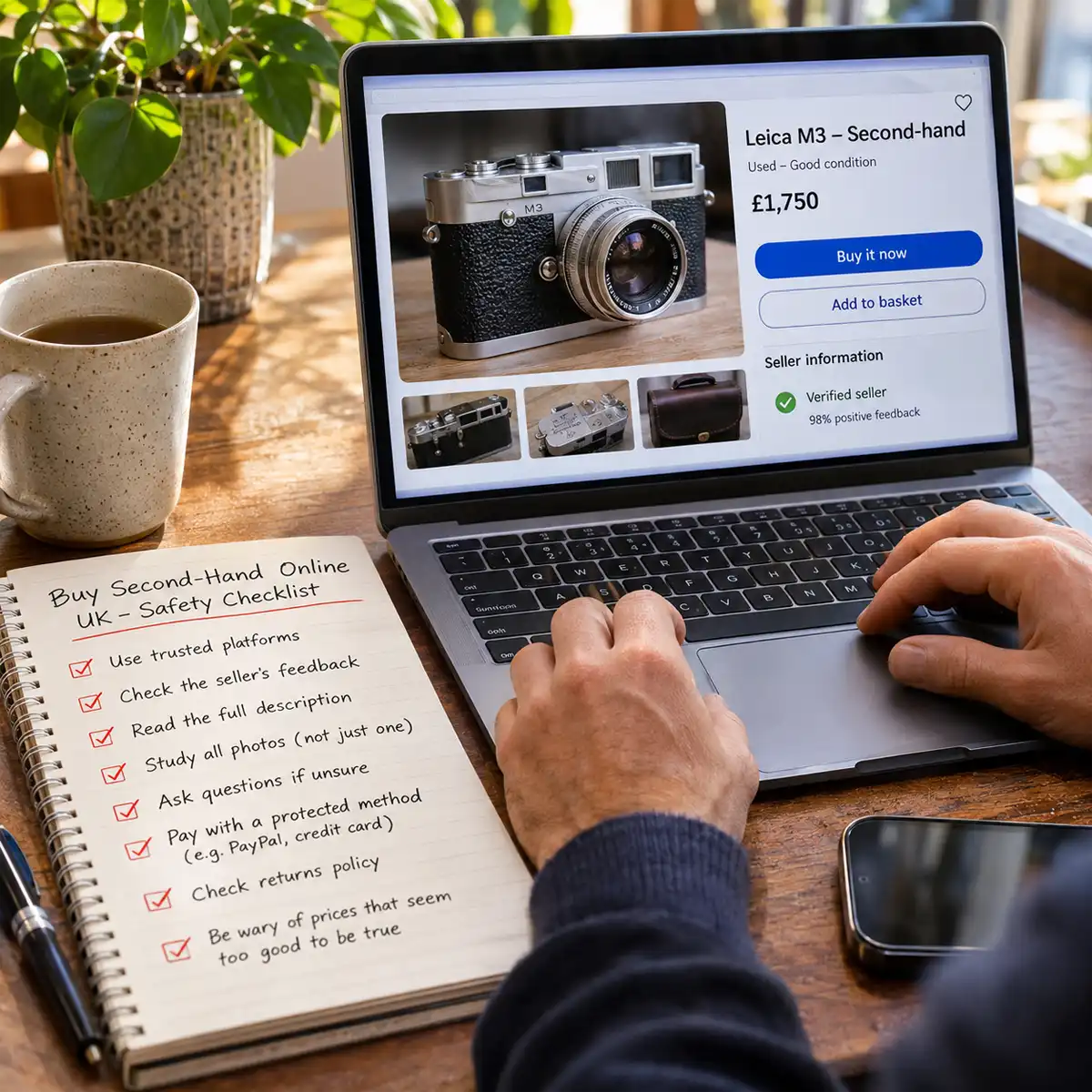
Pay in a way that protects you
How you pay matters more than anything else in a private sale.
Cash on collection is still the simplest option for low-value items, as long as you have seen the item and it works.
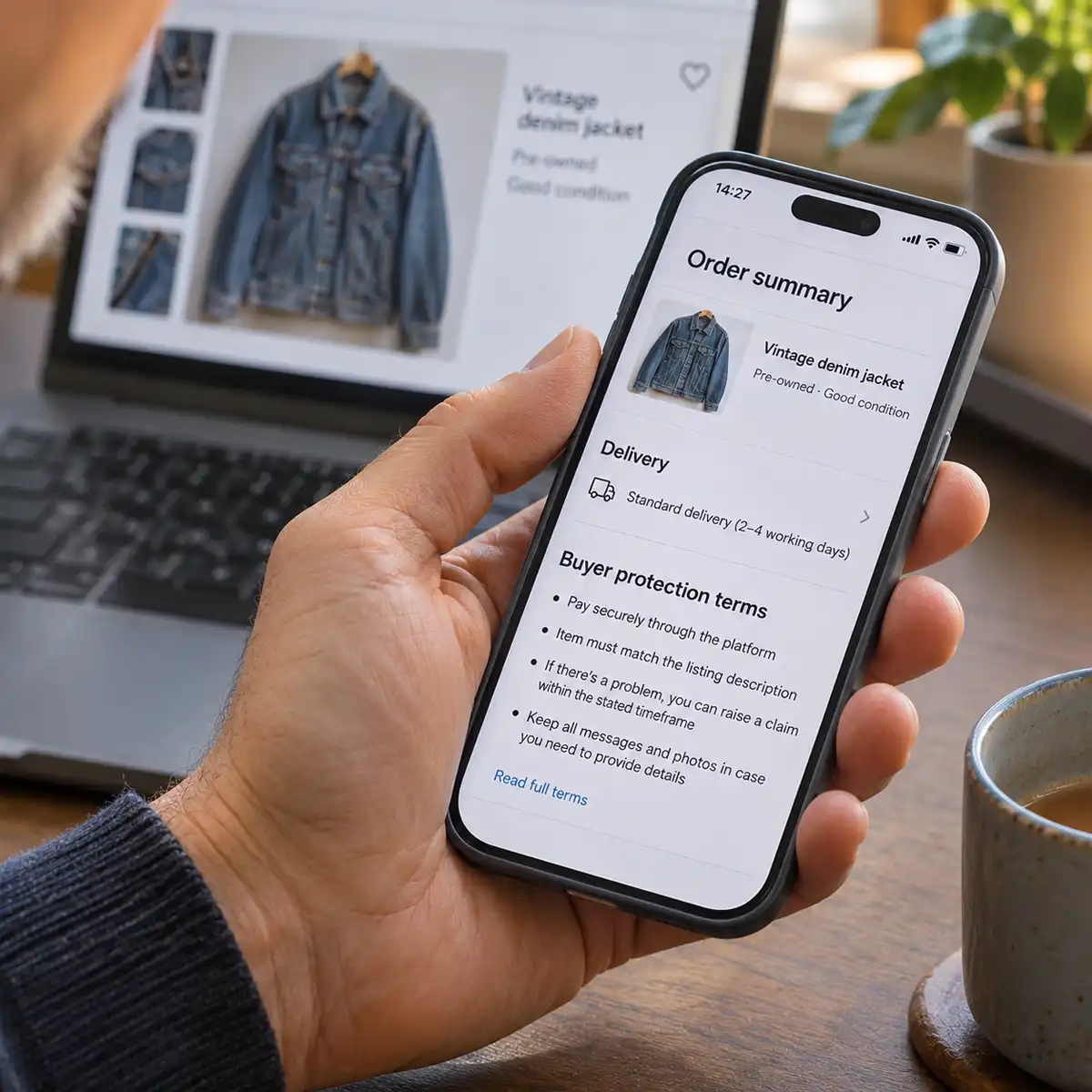
A payment service with buyer protection helps when you cannot collect in person. If you use PayPal, choose the "goods and services" option; paying as "friends and family" usually means no protection at all.
Bank transfers are the riskiest choice when you have not seen the item, because the money moves instantly. If you do pay this way and it turns out to be a scam, tell your bank straight away: since October 2024, UK banks have had to reimburse most victims of this kind of fraud.
Never pay with gift cards, vouchers or cryptocurrency. No genuine seller needs them, and the money cannot be traced or recovered.
Check before you buy
A few minutes of checking avoids most problems.
See the item, and try it. Switch electronics on, check that phones are not locked to someone else's account, and look at the condition in daylight.
For cars and vans, check the MOT history on GOV.UK for free using the registration number, compare the address on the V5C logbook with where you are viewing it, and consider a paid history check to see whether there is outstanding finance on the vehicle.
For rooms and flats, never pay before viewing, and make sure the person showing you round can actually let the property. In England and Wales a landlord must protect your deposit in a government-approved scheme.
Search the photos. A reverse image search often shows when pictures have been copied from another advert or a shop.
Meeting safely
When you collect or sell in person, meet in a public place in daylight if you can, or take someone with you. For larger items that have to be collected from a home, tell a friend where you are going. Count cash before you hand anything over, and do not let anyone rush you.
Know what you are entitled to
Buying from a private seller gives you fewer rights than buying from a shop. The item has to be as described, so a seller who lies about it may owe you your money back. But a private seller does not have to point out faults, and you cannot return something just because you changed your mind. That is why seeing and testing the item first is worth the trip.
If something goes wrong
Contact your bank immediately. You can call 159 from most UK phones to be put through to your bank's fraud team. 159 never calls you, so treat any call claiming to be from it as a scam.
Report it. In England, Wales and Northern Ireland, fraud is now reported to Report Fraud, which replaced Action Fraud, online or on 0300 123 2040. In Scotland, call Police Scotland on 101.
Report the advert on the site where you found it, so it can be taken down before someone else is caught.
Keep everything: messages, the advert, payment records and any names or numbers you were given.
How Redirectory keeps things safer
On Redirectory classifieds, buyers contact sellers through the site and a seller's email address is never shown on the ad. Every ad is checked for common scam signals before it goes live, adverts cannot contain phone numbers, links or email addresses, and anyone can report an ad that looks wrong. You can read the full rules and safety tips, and if you have something to sell, you can post a free ad in a couple of minutes.
Most people you meet through a classified ad are exactly who they say they are. A little caution simply makes sure the rest do not cost you anything.